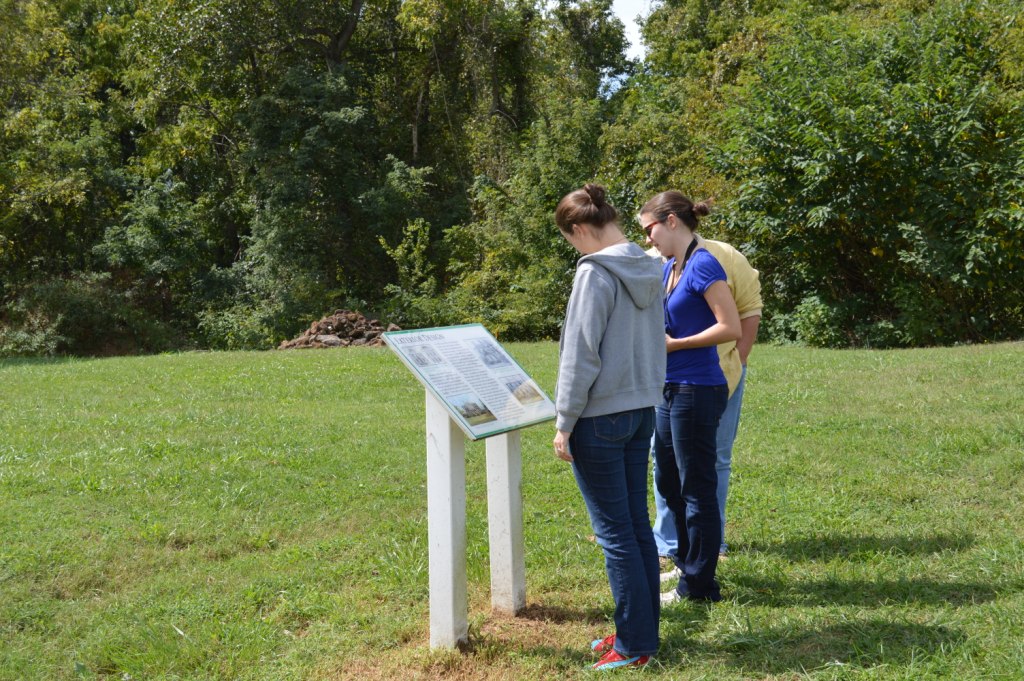
In late September, three women from the National Trust for Historic Preservation paid a visit to Menokin.
Organized by Menokin’s old friend, Katherine Malone-France, formerly of Oak Grove Restoration and currently the Director of Outreach, Education & Support, Historic Sites Department of the National Trust for Historic Preservation, the visit included the following members of the Trust’s technical support team:
- Ashley Wilson, Graham Gund Architect
Chief Architect in the Sites Department
- Rebecca Buntrock, Silman Preservation Engineering Fellow
- Helena Trueeck, an intern who is developing a teacher institute about deconstruction plantation myths
They were all smart, energized and informed and I was so impressed with the  combined knowledge and enthusiasm of the group. It was exciting to see young women crawling around old buildings and knowing as much about construction and engineering as any man! What great role models for that next generation of enthusiasts that we hope to attract.
I wrote to them after their visit and asked them reflect on their visit: why they came, what their expectations were, what their experiences here were, and what they left with.
In true Emily Post fashion, I got the following reply, complete with images, which I now share with you. We hope that you can take this spark of enthusiasm about The Menokin Project and fan it into a flame for yourselves and your friends and colleagues.
In their own words…
Rebecca Buntrock
“Before coming to Menokin, I had looked through the renderings for the proposed glass-house structure around the existing ruin. As a preservation engineer, I was very intrigued by this concept but until I saw the site I didn’t fully grasp its potential, which soon became clear.
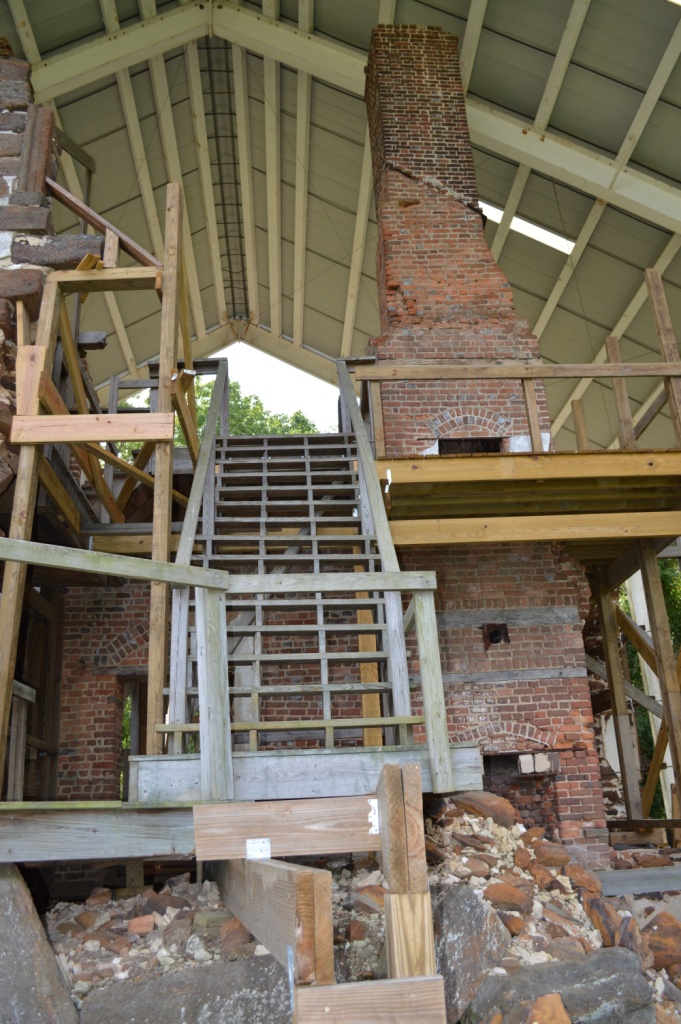
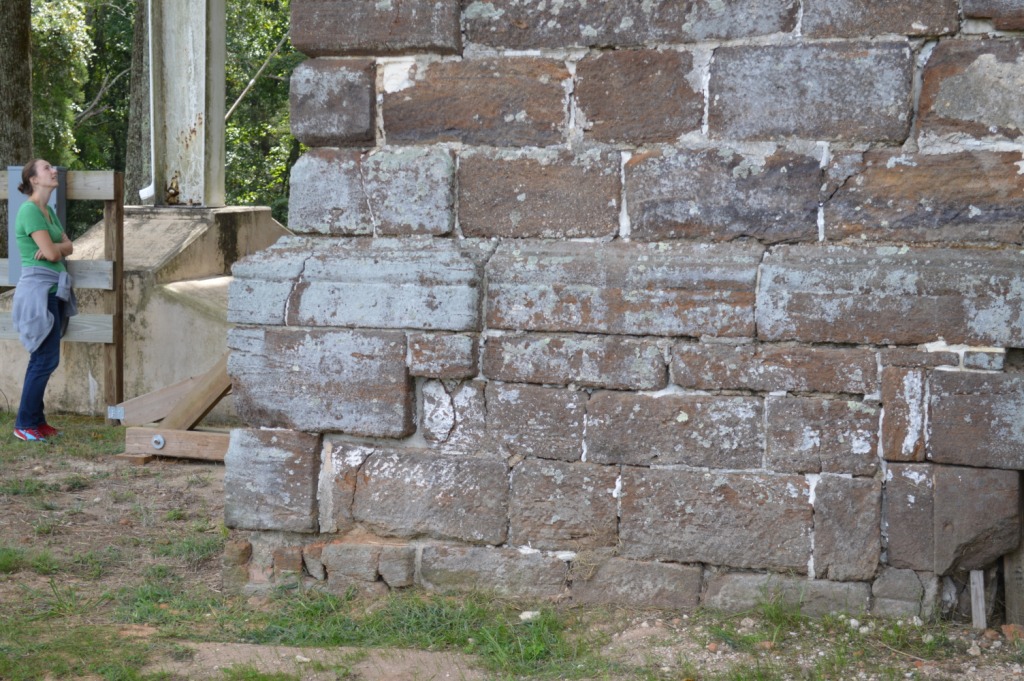
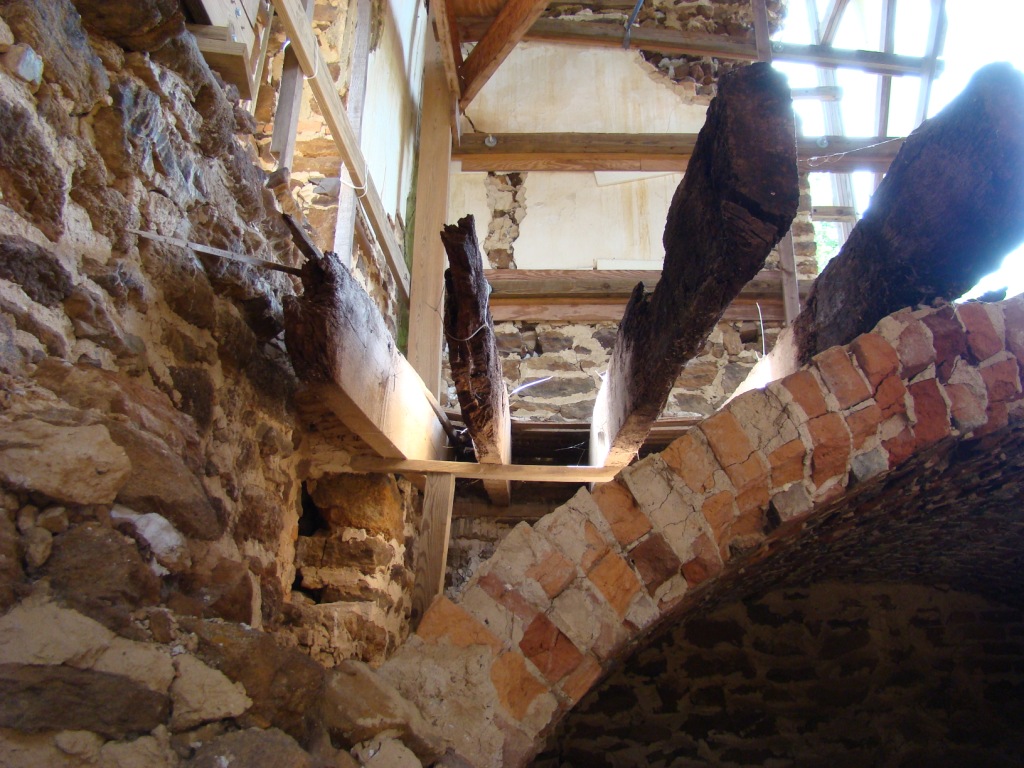
To me, the structure is much more about architecture, exploration, and the experience of seeing a building deconstructed, than it is about the history of Francis Lightfoot Lee. I loved the “tree-house” feel of the wood stairs snaking through what’s left of the building, and the chance to physically see and touch the structure. It’s also a great story regarding how documentation of the building saved part of its history.
If the Machado-Silvetti design is realized, it will serve as the ultimate case-study in architectural innovation, beyond just breaking the mold of the traditional historic house museum. It literally has every component of design challenge, from stabilization of the ruins, to working within an existing building and the construction of a new glass shell. This should be presented at conferences and written about in technical journals, to gain publicity within the industry. It will likely become a “pilgrimage site” for design professionals with the big names on the design team, in particular Eckersley O’Callaghan as the glass consultants.
 But the site is also appealing to a much larger audience – people are always very interested in seeing the building components, even if they aren’t architects or engineers. This often seems to be most popular part of many historic sites. There are presently brick and stucco construction mock-ups and classes held in one of the warehouses. It would be great to include the building trades, perhaps in the form of a field school, as part of the site’s development. Katherine and I also discussed possibly starting small, with a mock-up of the proposed curtain wall and steel armature, so people could see the proposed system, and the design team could begin to analyze how it’s going to work. Perhaps a curtain wall manufacturer with a proprietary system would be willing to donate money or materials for this effort.
I left the site thinking about my architecturally-inclined friends that would enjoy seeing the site, and considering when I’d come back. I look forward to seeing where the future leads for this site. I did a blog post on it: http://preservationframeofmind.wordpress.com/2012/09/25/menokin/“
Helena Treeck
“Before my visit to Menokin I had familiarized myself with the project through the website and the presentation that includes ideas and renderings of what  Menokin will look like after its transformation. However, when I arrived at the site I was expecting to see 2 houses: the one I had seen in the renderings and pictures and one that is used in the logo. I learned soon that there was only one house: The charming ruins from the spectacular renderings. Another reason I came to Menokin was that I had been told that it daringly challenges the traditional house museum form that we are so used to when visiting plantation house museums. This prospect was quite intriguing to me as I am currently working on a project for which I have looked at different plantation museums across the American South.
Menokin is indeed a breath of fresh air. The staff, Sarah and Leslie, are passionate about their idea of preserving the ruin and juxtaposing it with extremely modern architecture. A concept that presents itself to a multitude of ways to interpret this site: The open steel and glass structure that will preserve the ruin will allow the visitor to see preservation in action, take a look right at the guts of the house and be inside and outside at the same time. The experience of being inside this former “big house” can be recreated while conserving the innate charm of its ruin.
 As a visitor it is exciting to see the structure of the place and be wandering through it on a little adventure. The building concept is nothing short of brilliant. Little sections that are covered in Plexiglas on one side of the building already give a great idea of what the finished product might look like. The finished location could be used for lectures on history, architecture, engineering, or it could hosts weddings, wine tastings, and classical concert. But, the vision of this dynamic staff duo does not stop at the big house.
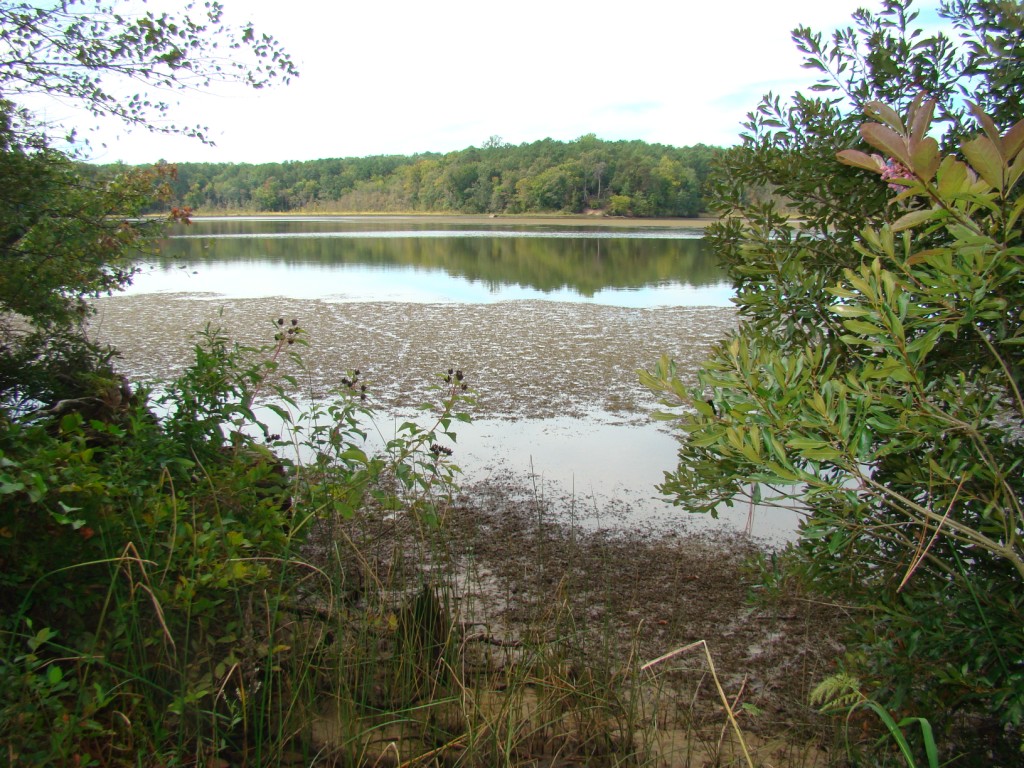
An education nature path leading down to Rappahannock Creek is already equipped with signs explaining the different plants growing on the property. Their idea is to reanimate the Creek which, once upon a time, was the local highway. Sarah and Leslie envision a pier to walk into the lake, a canoe rental by the lake, and have a general concept to integrate the local community.  Maybe one day guests will arrive at Menokin the old way, from the Creek site on a little boat.
One might at first think that Menokin is just another ruin, but Sarah’s and Leslie’s energy and enthusiasm can activate anybody’s imagination to see the vast potential of Menokin and its whole grounds.