Wednesday, February 27, 2013 marks the 247th anniversary of the signing of the Leedstown Resolves in Westmoreland County, VA in 1766. The document was the first organized protest of “taxation without representation” and was in opposition to the British imposition of the Stamp Act which required colonists to pay a duty on exports. Signers pledged “to bind ourselves to each other….with our lives and fortunes.”
The Northern Neck of Virginia Historical Society (NNVHS) will present its annual program commemorating this historic event at Menokin, the home of Francis Lightfoot Lee, who, along with his brother Richard Henry Lee, signed both the Leedstown Resolves and the Declaration of Independence.
Signers highlighted in past years have been resolution author Richard Henry Lee and brother Francis Lightfoot Lee, as well as Alvin Moxley, Meriwether Lee, William Sydnor, Moore Fauntleroy, Francis Waring, and William Roane.
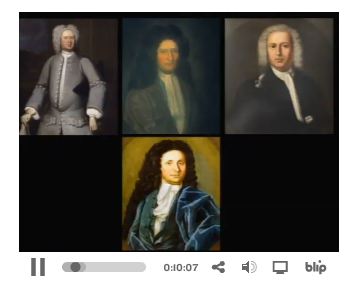
The 2013 commemoration will feature the lives of signers Richard “Squire” Lee of Lee Hall, Robert Wormeley Carter of Sabine Hall, John Belfield of Belle Mount, and Joseph Peirce of Templesman.
The program is being prepared by the NNVHS and hosted by the Menokin Foundation at the Martin Kirwan King Visitor’s Center at Menokin, located at 4037 Menokin Road in Warsaw, VA. Driving directions are available on the Menokin website at or by calling 804-333-1776. The program begins at 10:00 a.m. and all are invited to attend.
On a warm spring afternoon in 2009, a group of four archaeologists carefully removed a layer of dirt and mortar from a small nook between Menokin’s vaulted wine cellar and the exterior wall of the house. A glimmer beneath the debris caught the eye of one of the investigators as he slowly worked with his brush. What was revealed astounded the archaeology team and the staff of the Menokin Foundation.
The work diary of Thane Harpole and David Brown of DATA Investigations, the archaeology crew leaders, from the week of May 15, 2009 reads:
An amazing discovery occurred on Monday, when a small locket was found beneath the western first story window on the south façade, amongst rubble, but amazingly undamaged. The locket is porcelain set into a brass case with glass backing. The object measures about one inch by 3/4” and is highly decorated with the bust of a Greek or Roman figure surrounded by consecutive borders of blue, gold, and 1-2 mm sized pink colored jewels. Within the locket, and visible through the glass backing, is a lock of hair. Based on similar objects in museum collections, this object dates to the late 18th-century and was likely associated with the Lees. We have further research to conduct: To whom did this locket belong? Whose hair is encased in the piece? Is it a mourning locket or a love token? Many questions that we hope to answer in the near future!
The owner of the locket, the light brown hair lodged inside and the circumstances under which it came to be buried in that area of the house remained a mystery. The following summer, Laine Crosby—an investigative medium who was staying at Stratford Hall—made a visit to Menokin. Why not ask her to shed some light on the locket? As Laine held the object, she brought forth several images she felt were associated with it: a young woman named Sally, who didn’t live at Menokin, but would visit for extended periods; the year 1794; and a strong uncle or brother figure.
None of these associations made any sense to me—Becky and Frank Lee didn’t have children, and a Sally and the year 1794 were of no known significance to the house. The day following Laine’s visit, I dug around in the Menokin family genealogy and found that the second occupant of the house, John Tayloe Lomax who lived there from 1809 to 1818, had a sister named Sally, who was born in 1794. Sally, her mother, and several of her unwed sisters came to live at Menokin after the death of her father. I must admit, Laine’s reading of the locket took me by surprise—could it have belonged to Sally Lomax?
(Through my research to find “Sally”, I came to know her oldest sister, Judith Lomax—a real rebel who refused to come live at Menokin because she was “unwanted” there by her brother. But that’s a story for another day!)
To read more about Laine’s visit to Menokin and the mystery of the locket go to this month’s House and Home Magazine.
The Menokin Foundation is very fortunate to have an Advisory Council of professionals in the fields of architecture, engineering, historic conservation, museum programs and cultural landscape which has been established to assist in the decision making process of the Glass Concept.
Staff members sat down with some of these advisors over dinner last fall and interviewed them about why they love Menokin, and why they have dedicated so much time to this project.
The result is this video which attempts to encapsulate the spark of imagination, inspiration and innovation that is Menokin.
The Virginia Historical Society has posted a video of the recent banner lecture, Planter Oligarchy on Virginia’s Northern Neck, which was co-sponsored by Menokin. The video features a fabulous introduction by Menokin’s own, Sarah Dillard Pope, Executive Director of the Menokin Foundation.
Also includes a shout out to Tayloe Negus and Tayloe Emery, both Hampden-Sydney alums, who help established the relationship between Dr. Coombs and Menokin.
Green Spring was the childhood home of Hannah Ludwell Lee, mother of Francis Lightfoot Lee. In later years the estate was inherited by Frank’s brother, William.
Tired of presidential candidates? Weary of the “approved messages” bombarding you from television ads? Longing for a fresh face to breathe hope into our political melee?
You are in luck. Frank has cast his hat into the political arena and is looking for your vote.
In this Presidential Election year, we thought it might be fun, educational and enlightening to examine the life of this 18th-century “politician” to see how he stands up to today’s candidates in character, record and opinion (both about
him and by him).
What Kind of Man Was Francis Lightfoot Lee?
Francis Lightfoot Lee is what one might call a “forgotten revolutionary.” Described by his niece as the “sweetest of all the Lee race” and as possessing a temper “as soft as the dove’s,” Lee, his memory now nearly hidden beneath the rubble of his Virginia mansion, had a life that was “most useful and worthy,” the life of a patriot of the American Revolution.
With thirty years of an active political life, a life in which he opposed British measures, sought independence, and served the nation through a number of committees as a member of the Virginia House of Burgesses, the Second Continental Congress, and the Virginia State Senate. Lee was certainly not an “inconspicuous” man, nor was he merely “soft as a dove.” Rather, Lee was a true patriot, not only according to standards held by his contemporaries, but also to his own.
Is Frank Lee the kind of man that could run for President in 2012? If so, could he win?
Resume
• In 1758, he took his seat as representative of Loudoun County to the Virginia House of Burgesses, having moved there to maintain his lands inherited from his father.
• He became an opponent to taxation without representation and other British offenses, which he protested not only through personal letters, but also in signing his support to important documents, including the Westmoreland Resolves of 1766.
• As a member of a committee appointed to protest British policies toward the colonies in 1768, Lee maintained an active role in opposition to the British.
• Lee continued to serve as a Burgess from Richmond County until elected as a Virginia delegate to the Second Continental Congress in August 1775. He fully supported American Independence throughout most of his political career, signing the Declaration of Independence on July 4, 1776.
• Lee remained a member of Congress until 1779, serving on a variety of committees including the Board of War, Committee of Secret Correspondence, and other ad-hoc committees.
• In 1779, Francis Lightfoot Lee retired from the Second Continental Congress due to the three-year limit that had since been imposed by the Revolutionary Government.
• In 1780, Lee again entered Virginia politics, having been elected to serve as a member of the Virginia Senate, until 1782 when he retired from politics. He did, however, remain interested in the political scene, and is purported to have supported the ratification of the Constitution.
This man’s life-work was so inconspicuous, that his name would now be wholly forgotten, but for one thing- he signed the Declaration of Independence. Yet his life was a most useful and worthy one. It was a good and profitable voyage, though it left no phosphorescent splendors in its wake.
–Mark Twain on Francis Lightfoot Lee, 1877
Character
Not a lot is written about Francis Lightfoot Lee, as he was certainly overshadowed in the political arena by his outspoken older brother, Richard Henry Lee. Yet those that did pause to put their thoughts about him on paper seem to agree that he was a quiet, thoughtful yet passionate man.
Lee has not been granted his proper place in history, for his involvement with the
founding of the country lays not only in his signature on a document, but with thirty years of an active political life, a life in which he opposed British measures, sought
independence, and served the nation through a number of committees as a member of the Virginia House of Burgesses, the Second Continental Congress, and the Virginia State Senate. Lee was certainly not an “inconspicuous” man, nor was he merely “soft as a dove.” Rather, Lee was a true patriot, not only according to standards held by his contemporaries, but also to his own.
He dealt in no shams; he had no ostentations of dress or equipage. He was educated. He was more than that – he was finely cultivated. Mr. Lee defiled himself with no juggling, or wire-pulling, or begging, to acquire a place in the provincial legislature, but went thither when he was called.
–Mark Twain, from the Pennsylvania Magazine of History and Biography, I, no.3, 1877
As for whether or not Francis Lightfoot Lee had “the right stuff” to be a political leader of the 21st century, perhaps his own words shed the greatest light on that question.
This is not the time for men of abilities with good intentions to be only spectators, if we can’t do all the good we cou’d wish, let us at least endeavour to prevent all the mischief in our power.
The popular Banner Lecture Series offered at the Virginia Historical Society in Richmond, VA will host two guest speakers in October, both co-sponsored by The Menokin Foundation.
These programs will be held at the VHS, which is located at 428 North Boulevard in Richmond, VA.
The first takes place on Thursday, October 4, 2012 at noon, and features Dr. John C. Coombs, a professor at Hampden-Sydney College, discussing Planter Oligarchy on Virginia’s Northern Neck.
Unlocking Menokin’s Secrets: Archaeological and Landscape Research at a Northern Neck Plantation takes place on Thursday, October 25, 2012 at noon, and will be presented by David Brown and Thane Harpole of DATA Investigations.
One of the great houses to survive from colonial Virginia, Menokin was the result of a unique collaboration between John Tayloe II of Mount Airy and Francis Lightfoot Lee, the husband of his daughter Rebecca. Tayloe gave Lee a life interest in 1,000 acres of his vast Richmond County estate and, as a wedding present, built the plantation house and surrounding structures.
David Brown at work at Menokin.
Though scant written records remain, other clues offer insight into this adaptation of European design to the environment of eastern Virginia. David Brown with DATA Investigations will discuss recent archaeological and landscape research conducted at the site.
Reservations are not required for either lecture. Admission is $6/adults, $5/seniors, $4/children and students, free/members (please present card) and to Richmond Times-Dispatch readers with a Press Pass coupon. Parking is free. For more information visit: www.vahistorical.org/news/lectures_banner.htm.
The current issue of Virginia Living has an article about the magnificent colonial plantation home, Mount Airy. This 18th-century architectural masterpiece was the girlhood home of Rebecca Tayloe Lee, wife of Francis Lightfoot Lee of Menokin.
In fact, the Menokin property was once part of the estate of John Tayloe II, who carved out 1,000 acres and financed the building of Menokin as a wedding gift for Frank and Becky.
These exquisite photographs by Roger Foley give you a peak into the genteel lifestyle of the Mount Airy residents. The article offers poignant insight into the nature of living in – and caring for – an iconic family home.
These 10th generation great nephews of Rebecca Tayloe Lee are playing, living and growing in the same house where she grew up.You can almost feel the breeze wafting through the great hall of Mount Airy.Moose has gone to heaven, but lived a heavenly life at Mount Airy alongside his statuary brethren.
Co-sponsored by the Virginia Historical Society. Program held at the VHS located at 428 North Boulevard, Richmond, VA
The rise of a distinct class of affluent families to economic, social, and political dominance in Virginia during the seventeenth and early eighteenth centuries is without doubt one of the most important developments in the Old Dominion’s early history.
As a group, however, the “gentry” were far from homogenous. John C. Coombs will draw on research for his forthcoming book The Rise of Virginia Slavery to discuss the foundations of power that were common across all ranks of the elite, as well as the circumstances that allowed the Carters, Lees, and Tayloes to achieve distinction as the colony’s “first families.”
John Tayloe II of Mount Airy
Landon Carter of Sabine Hall
Thomas Lee of Stratford Hall
Dr. Coombs is a professor of history at Hampden-Sydney College and coeditor of Early Modern Virginia: Reconsidering the Old Dominion.
Reservations are not required. Admission is $6/adults, $5/seniors, $4/children and students, free/members (please present card) and to Richmond Times-Dispatch readers with a Press Pass coupon. Parking is free.For more information visit: www.vahistorical.org/news/lectures_banner.htm
Well, they were, anyway. In June of this year, members of The Menokin Project design team traveled to the Northern Neck for a planning meeting.
In attendance were the architects from Machado and Silvetti, the cultural landscape historians from Reed Hilderbrand, and members of the Menokin staff and board of trustees.
We were treated to a wonderful dinner at King Copsico Farm, the home of Helen and Tayloe Murphy, which is situated on a gorgeous bluff overlooking the Potomac River.
Left to Right: Jose Ribera – Project Manager/Machado & Silvetti Rodolpho Machado – Principal/Machado & Silvetti Jorge Silvetti – Principal/Machado & Silvetti Leslie Rennolds – Assistant Director/Menokin Foundation Tayloe Murphy – Board President/Menokin Foundation Alan Brown – Consultant for Reed Hilderbrand Michael Yusem – Senior Associate/Machado & Silvetti Sarah Pope – Executive Director/Menokin Foundation Ryan Ives – Reed Hilderbrand Penelope Saffer – Trustee/Menokin Foundation John Grove – Reed Hilderbrand Helen Murphy – Trustee/Menokin FoundationA view of the Potomac River from King Copsico Farm.

 The Northern Neck of Virginia Historical Society (NNVHS) will present its annual program commemorating this historic event at Menokin, the home of Francis Lightfoot Lee, who, along with his brother Richard Henry Lee, signed both the Leedstown Resolves and the Declaration of Independence.
 The program is being prepared by the NNVHS and hosted by the Menokin Foundation at the Martin Kirwan King Visitor’s Center at Menokin, located at 4037 Menokin Road in Warsaw, VA. Driving directions are available on the Menokin website at or by calling 804-333-1776. The program begins at 10:00 a.m. and all are invited to attend.
 measures about one inch by 3/4” and is highly decorated with the bust of a Greek or Roman figure surrounded by consecutive borders of blue, gold, and 1-2 mm sized pink colored jewels. Within the locket, and visible through the glass backing, is a lock of hair. Based on similar objects in museum collections, this object dates to the late 18th-century and was likely associated with the Lees. We have further research to conduct: To whom did this locket belong? Whose hair is encased in the piece? Is it a mourning locket or a love token? Many questions that we hope to answer in the near future!