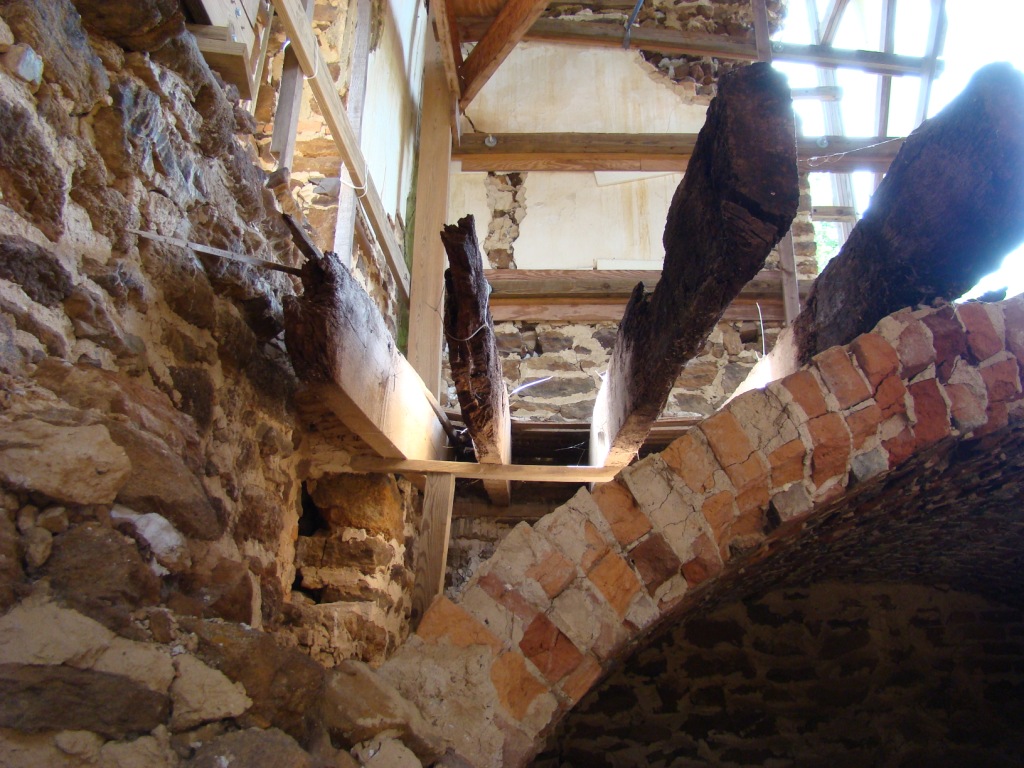
While Hurricane Sandy wreaked havoc over much of the East Coast the past few days, the Northern Neck of Virginia seems to have thankfully dodged a big bullet. I am glad to report that the old girl is still standing and no worse for the soaking.
Other than a flooded lane and some wet carpet in the Visitor’s Center, everything is shored up and just how we left it. That’s pretty good news for a mostly collapsed house.
Northern Neck Master Naturalist John Narney was in the Menokin woods last week, working on a flora and fauna survey for the Chesapeake Bay Gateways Grant.
He encountered some fauna alright. Of the reptilian persuasion. Luckily he had his camera handy and shared these shots with me.
Eastern Rat snake (formerly called a Black Snake)“When green is all there is to be It could make you wonder why, but why wonder why Wonder, I am green and it’ll do fine, it’s beautiful And I think it’s what I want to be.” ~ Kermit The FrogThis narrow green snake was over two feet long.
The Menokin Foundation is very fortunate to have an Advisory Council of professionals in the fields of architecture, engineering, historic conservation, museum programs and cultural landscape which has been established to assist in the decision making process of the Glass Concept.
Staff members sat down with some of these advisors over dinner last fall and interviewed them about why they love Menokin, and why they have dedicated so much time to this project.
The result is this video which attempts to encapsulate the spark of imagination, inspiration and innovation that is Menokin.
What were we thinking? Having an October 15th submission deadline completely rules out the beautiful fall foliage for the photo contest.
So we have our heads screwed on straight now, and have extended the deadline for submissions to November 15th. The reception will take place on November 30th. All other rules still apply.
Come on by. The property is open, even when the Visitor’s Center is not.
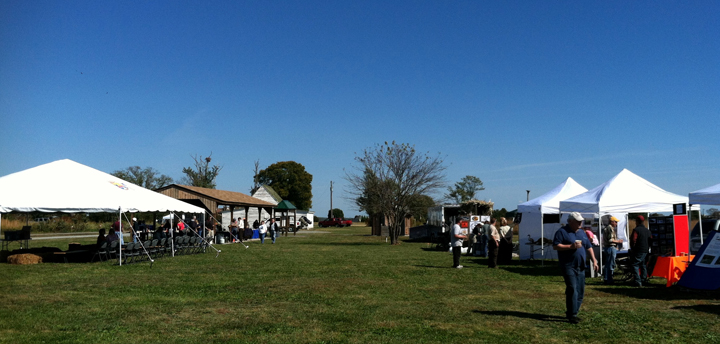
Yesterday was the 2nd annual “Go Wild” event at the Rappahannock River Valley National Wildlife Refuge’s Hutchinson Tract in Essex County, VA.
After the cold, windy, rainy day that greeted last year’s eventers, the clear blue October sky and 75+ degree temperatures were a welcome change.
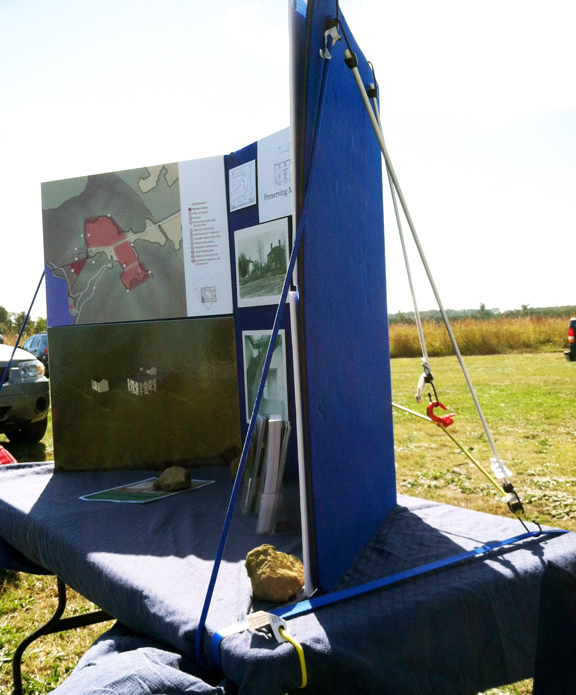
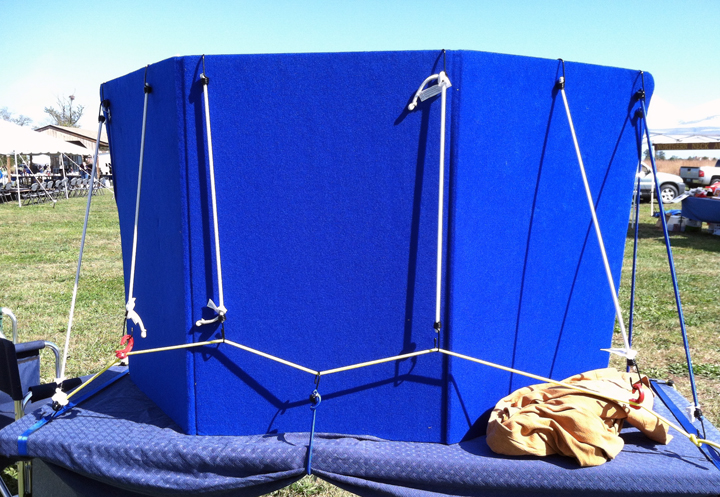
The wind still had a few tricks up her sleeve, however, and there were examples of human ingenuity all over the place as exhibitors tried to hold down tents, brochures and displays. My husband Ben, the master of all things rigged, “Bengineered” this bungee bracing system to keep the Menokin display board upright and in place.
I was there representing Menokin, and informing visitors about our nature trails and waterfront on Cat Point Creek, and explaining that 300 of our 500 acres are, in fact, part of the refuge.
There were all kinds of exhibitors on hand – from Native Plants Societies, Master Naturalist and Oyster Gardeners, to bluebird house building, reforestation surveyors and wildlife rehabilitation experts.
Our booth was next door to The Wildlife Center of Virginia, where their educator and handler, Rayna, brought out a series of rehabilitated birds to share with the public. You can find out these birds stories on their website.
Grayson, a broad-winged hawk, gave me the stare down.Edie, an American Kestrel, is very comfortable with humans.
The Raptor Society of Virginia was also on hand with a few of their birds. This little screech owl won me over with her big green eyes and haughty, knowing air.
Fire, an Eastern screech owl
Congressman Rob Whitman spoke briefly, after being introduced by Refuge Administrator Andy Hoffman and RRVNWR Friends President, Anne Graziano.
Rob Whitman addressed the crowdAndy Hoffman and Anne Graziano both spoke
The Virginia Historical Society has posted a video of the recent banner lecture, Planter Oligarchy on Virginia’s Northern Neck, which was co-sponsored by Menokin. The video features a fabulous introduction by Menokin’s own, Sarah Dillard Pope, Executive Director of the Menokin Foundation.
Also includes a shout out to Tayloe Negus and Tayloe Emery, both Hampden-Sydney alums, who help established the relationship between Dr. Coombs and Menokin.
Green Spring was the childhood home of Hannah Ludwell Lee, mother of Francis Lightfoot Lee. In later years the estate was inherited by Frank’s brother, William.
Tired of presidential candidates? Weary of the “approved messages” bombarding you from television ads? Longing for a fresh face to breathe hope into our political melee?
You are in luck. Frank has cast his hat into the political arena and is looking for your vote.
In this Presidential Election year, we thought it might be fun, educational and enlightening to examine the life of this 18th-century “politician” to see how he stands up to today’s candidates in character, record and opinion (both about
him and by him).
What Kind of Man Was Francis Lightfoot Lee?
Francis Lightfoot Lee is what one might call a “forgotten revolutionary.” Described by his niece as the “sweetest of all the Lee race” and as possessing a temper “as soft as the dove’s,” Lee, his memory now nearly hidden beneath the rubble of his Virginia mansion, had a life that was “most useful and worthy,” the life of a patriot of the American Revolution.
With thirty years of an active political life, a life in which he opposed British measures, sought independence, and served the nation through a number of committees as a member of the Virginia House of Burgesses, the Second Continental Congress, and the Virginia State Senate. Lee was certainly not an “inconspicuous” man, nor was he merely “soft as a dove.” Rather, Lee was a true patriot, not only according to standards held by his contemporaries, but also to his own.
Is Frank Lee the kind of man that could run for President in 2012? If so, could he win?
Resume
• In 1758, he took his seat as representative of Loudoun County to the Virginia House of Burgesses, having moved there to maintain his lands inherited from his father.
• He became an opponent to taxation without representation and other British offenses, which he protested not only through personal letters, but also in signing his support to important documents, including the Westmoreland Resolves of 1766.
• As a member of a committee appointed to protest British policies toward the colonies in 1768, Lee maintained an active role in opposition to the British.
• Lee continued to serve as a Burgess from Richmond County until elected as a Virginia delegate to the Second Continental Congress in August 1775. He fully supported American Independence throughout most of his political career, signing the Declaration of Independence on July 4, 1776.
• Lee remained a member of Congress until 1779, serving on a variety of committees including the Board of War, Committee of Secret Correspondence, and other ad-hoc committees.
• In 1779, Francis Lightfoot Lee retired from the Second Continental Congress due to the three-year limit that had since been imposed by the Revolutionary Government.
• In 1780, Lee again entered Virginia politics, having been elected to serve as a member of the Virginia Senate, until 1782 when he retired from politics. He did, however, remain interested in the political scene, and is purported to have supported the ratification of the Constitution.
This man’s life-work was so inconspicuous, that his name would now be wholly forgotten, but for one thing- he signed the Declaration of Independence. Yet his life was a most useful and worthy one. It was a good and profitable voyage, though it left no phosphorescent splendors in its wake.
–Mark Twain on Francis Lightfoot Lee, 1877
Character
Not a lot is written about Francis Lightfoot Lee, as he was certainly overshadowed in the political arena by his outspoken older brother, Richard Henry Lee. Yet those that did pause to put their thoughts about him on paper seem to agree that he was a quiet, thoughtful yet passionate man.
Lee has not been granted his proper place in history, for his involvement with the
founding of the country lays not only in his signature on a document, but with thirty years of an active political life, a life in which he opposed British measures, sought
independence, and served the nation through a number of committees as a member of the Virginia House of Burgesses, the Second Continental Congress, and the Virginia State Senate. Lee was certainly not an “inconspicuous” man, nor was he merely “soft as a dove.” Rather, Lee was a true patriot, not only according to standards held by his contemporaries, but also to his own.
He dealt in no shams; he had no ostentations of dress or equipage. He was educated. He was more than that – he was finely cultivated. Mr. Lee defiled himself with no juggling, or wire-pulling, or begging, to acquire a place in the provincial legislature, but went thither when he was called.
–Mark Twain, from the Pennsylvania Magazine of History and Biography, I, no.3, 1877
As for whether or not Francis Lightfoot Lee had “the right stuff” to be a political leader of the 21st century, perhaps his own words shed the greatest light on that question.
This is not the time for men of abilities with good intentions to be only spectators, if we can’t do all the good we cou’d wish, let us at least endeavour to prevent all the mischief in our power.
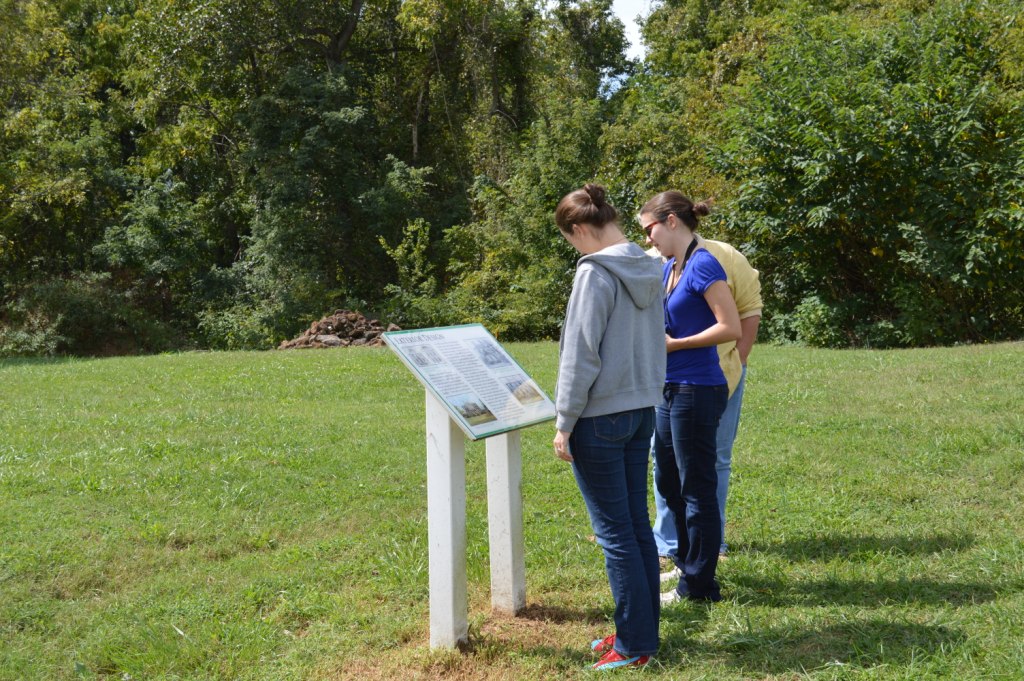
In late September, three women from the National Trust for Historic Preservation paid a visit to Menokin.
Organized by Menokin’s old friend, Katherine Malone-France, formerly of Oak Grove Restoration and currently the Director of Outreach, Education & Support, Historic Sites Department of the National Trust for Historic Preservation, the visit included the following members of the Trust’s technical support team:
Ashley Wilson, Graham Gund Architect
Chief Architect in the Sites Department
Helena Trueeck, an intern who is developing a teacher institute about deconstruction plantation myths
They were all smart, energized and informed and I was so impressed with the combined knowledge and enthusiasm of the group. It was exciting to see young women crawling around old buildings and knowing as much about construction and engineering as any man! What great role models for that next generation of enthusiasts that we hope to attract.
I wrote to them after their visit and asked them reflect on their visit: why they came, what their expectations were, what their experiences here were, and what they left with.
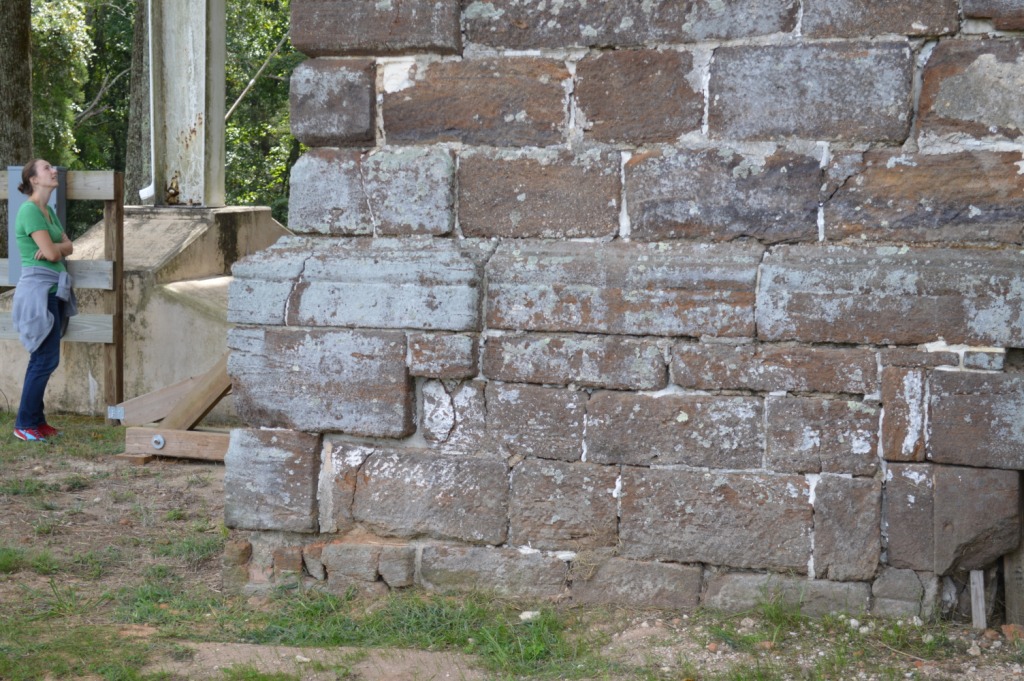
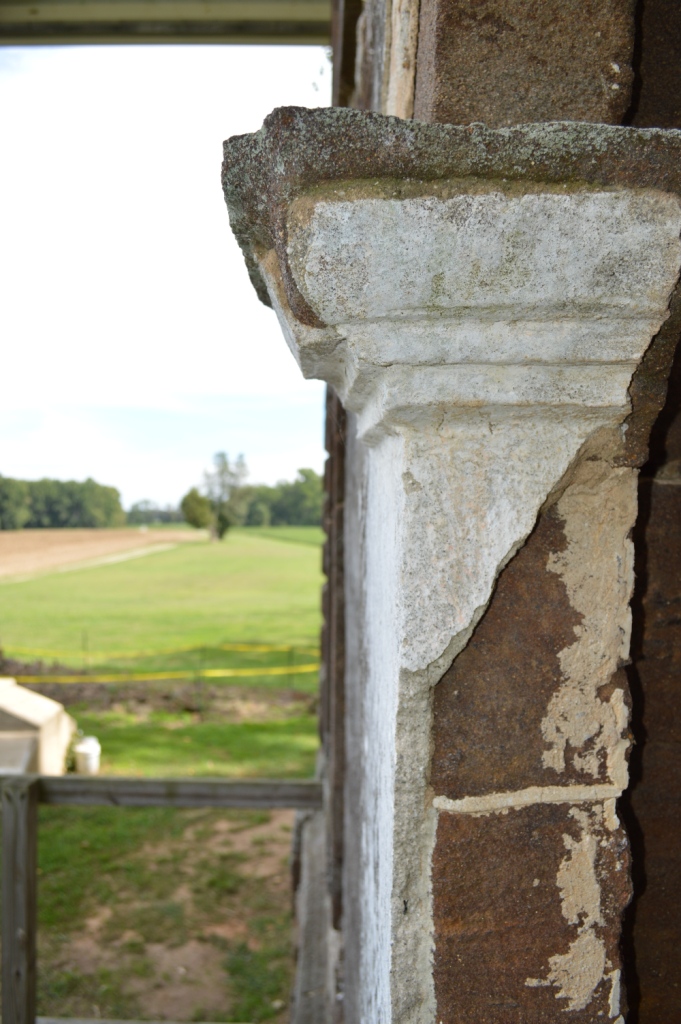
In true Emily Post fashion, I got the following reply, complete with images, which I now share with you. We hope that you can take this spark of enthusiasm about The Menokin Project and fan it into a flame for yourselves and your friends and colleagues.
In their own words…
Rebecca Buntrock
“Before coming to Menokin, I had looked through the renderings for the proposed glass-house structure around the existing ruin. As a preservation engineer, I was very intrigued by this concept but until I saw the site I didn’t fully grasp its potential, which soon became clear.
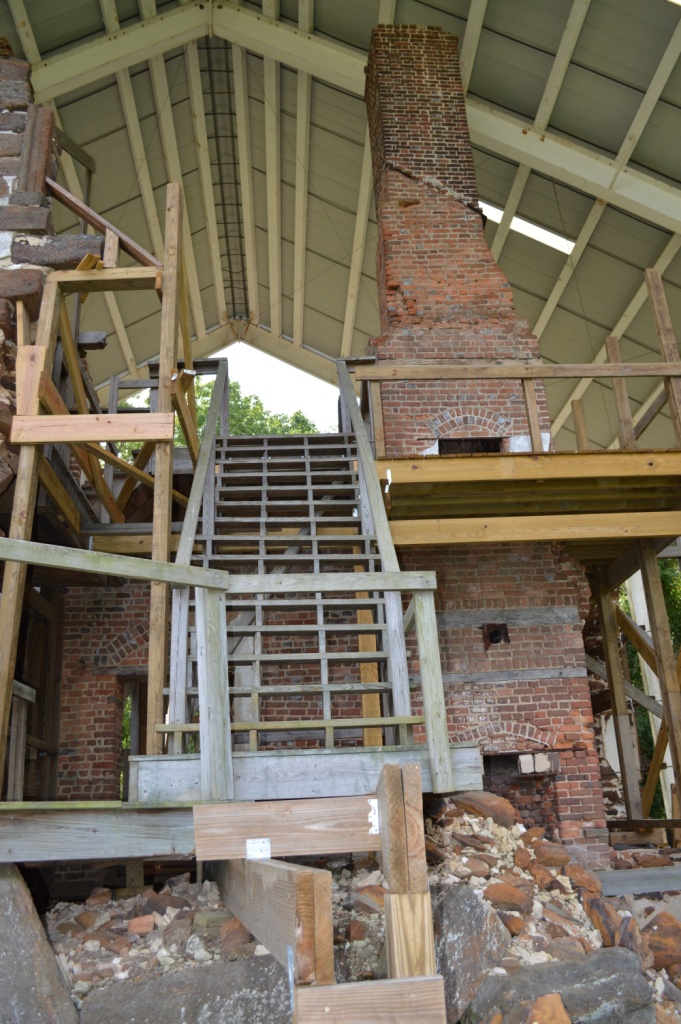
To me, the structure is much more about architecture, exploration, and the experience of seeing a building deconstructed, than it is about the history of Francis Lightfoot Lee. I loved the “tree-house” feel of the wood stairs snaking through what’s left of the building, and the chance to physically see and touch the structure. It’s also a great story regarding how documentation of the building saved part of its history.
If the Machado-Silvetti design is realized, it will serve as the ultimate case-study in architectural innovation, beyond just breaking the mold of the traditional historic house museum. It literally has every component of design challenge, from stabilization of the ruins, to working within an existing building and the construction of a new glass shell. This should be presented at conferences and written about in technical journals, to gain publicity within the industry. It will likely become a “pilgrimage site” for design professionals with the big names on the design team, in particular Eckersley O’Callaghan as the glass consultants.
But the site is also appealing to a much larger audience – people are always very interested in seeing the building components, even if they aren’t architects or engineers. This often seems to be most popular part of many historic sites. There are presently brick and stucco construction mock-ups and classes held in one of the warehouses. It would be great to include the building trades, perhaps in the form of a field school, as part of the site’s development. Katherine and I also discussed possibly starting small, with a mock-up of the proposed curtain wall and steel armature, so people could see the proposed system, and the design team could begin to analyze how it’s going to work. Perhaps a curtain wall manufacturer with a proprietary system would be willing to donate money or materials for this effort.
I left the site thinking about my architecturally-inclined friends that would enjoy seeing the site, and considering when I’d come back. I look forward to seeing where the future leads for this site. I did a blog post on it: http://preservationframeofmind.wordpress.com/2012/09/25/menokin/“
Helena Treeck
“Before my visit to Menokin I had familiarized myself with the project through the website and the presentation that includes ideas and renderings of what Menokin will look like after its transformation. However, when I arrived at the site I was expecting to see 2 houses: the one I had seen in the renderings and pictures and one that is used in the logo. I learned soon that there was only one house: The charming ruins from the spectacular renderings. Another reason I came to Menokin was that I had been told that it daringly challenges the traditional house museum form that we are so used to when visiting plantation house museums. This prospect was quite intriguing to me as I am currently working on a project for which I have looked at different plantation museums across the American South.
Menokin is indeed a breath of fresh air. The staff, Sarah and Leslie, are passionate about their idea of preserving the ruin and juxtaposing it with extremely modern architecture. A concept that presents itself to a multitude of ways to interpret this site: The open steel and glass structure that will preserve the ruin will allow the visitor to see preservation in action, take a look right at the guts of the house and be inside and outside at the same time. The experience of being inside this former “big house” can be recreated while conserving the innate charm of its ruin.
As a visitor it is exciting to see the structure of the place and be wandering through it on a little adventure. The building concept is nothing short of brilliant. Little sections that are covered in Plexiglas on one side of the building already give a great idea of what the finished product might look like. The finished location could be used for lectures on history, architecture, engineering, or it could hosts weddings, wine tastings, and classical concert. But, the vision of this dynamic staff duo does not stop at the big house.
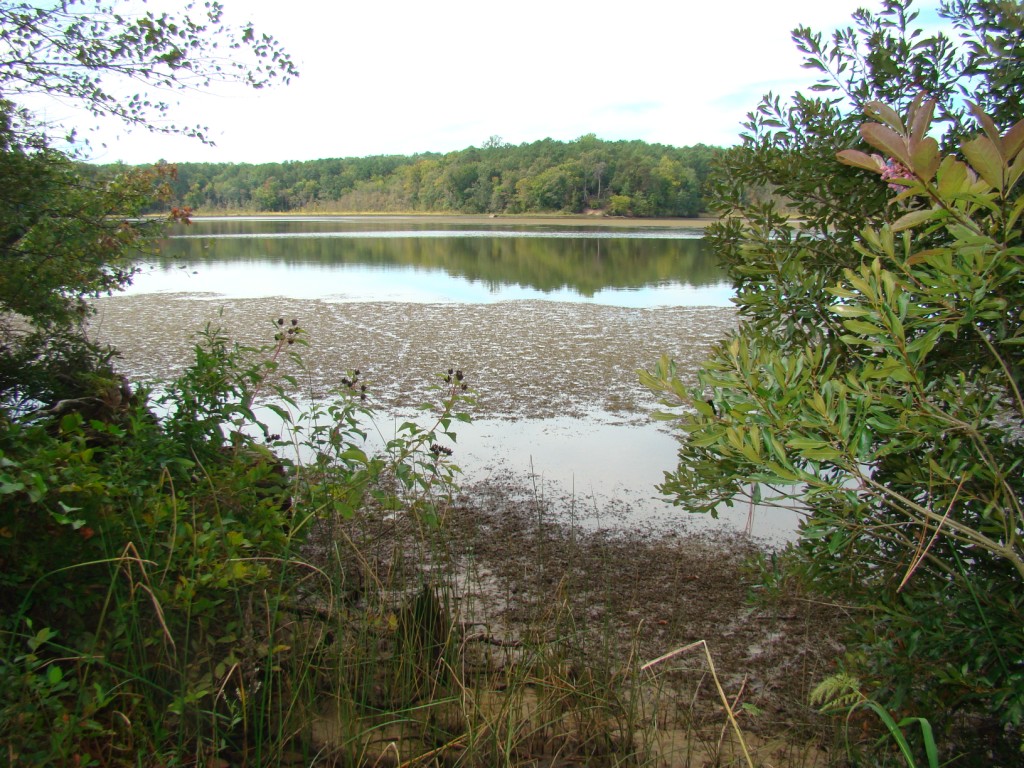
An education nature path leading down to Rappahannock Creek is already equipped with signs explaining the different plants growing on the property. Their idea is to reanimate the Creek which, once upon a time, was the local highway. Sarah and Leslie envision a pier to walk into the lake, a canoe rental by the lake, and have a general concept to integrate the local community. Maybe one day guests will arrive at Menokin the old way, from the Creek site on a little boat.
One might at first think that Menokin is just another ruin, but Sarah’s and Leslie’s energy and enthusiasm can activate anybody’s imagination to see the vast potential of Menokin and its whole grounds.